

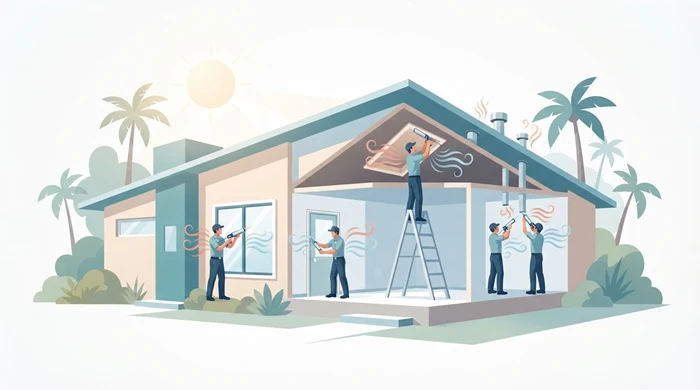
Understanding home air sealing cost in South Florida helps homeowners budget for better indoor comfort, lower energy bills, and improved moisture control. The price depends on the size of the property, the number of air leaks, the accessibility of the attic, and the materials needed to seal gaps around windows, doors, ducts, and other openings. With South Florida’s hot, humid climate and heavy reliance on air conditioning, sealing unwanted air leaks can be a practical home improvement investment.
Homeowners who understand typical prices, available sealing methods, and the factors that influence labor costs can make informed decisions before hiring a contractor.
Key Takeaways
-
Typical air sealing projects may cost $300–$1,500 for targeted improvements and $1,500–$4,000 or more for extensive work.
-
Attic access, building size, leak severity, and materials influence the final price.
-
Proper sealing can improve comfort, reduce unwanted humid air infiltration, and support HVAC efficiency.
-
Professional assessment helps identify hidden leaks and prioritize improvements that offer the greatest value.
How Much Does Home Air Sealing Cost in South Florida?
As of October 2026, homeowners can use the following planning estimates to understand the likely home air sealing cost for common residential projects in South Florida. These are indicative budgeting ranges, not verified contractor quotes, and actual prices vary by property and scope.
| Air sealing project | Estimated cost (USD) |
| Basic sealing around doors and windows | $150–$500 |
| Sealing gaps around pipes, outlets, and wall openings | $200–$600 |
| Attic air leak sealing | $400–$1,200 |
| Whole-home air sealing | $700–$2,000 |
| Air sealing combined with attic insulation | $1,200–$3,000 |
| Extensive sealing with repairs and difficult access | $2,000–$4,000+ |
The home air sealing cost for a small property with a few obvious gaps may stay near the lower end. Larger houses with difficult attic access, multiple leakage points, damaged weatherstripping, or additional insulation needs can require a substantially higher budget.
These figures are general estimates informed by available Florida insulation pricing and national energy-efficiency guidance. They are not a published South Florida market survey. For context, a 2026 Florida attic insulation guide lists approximately $1,200–$1,800 for smaller homes and $1,800–$2,800 for average-sized homes when air sealing is included.
What Is Home Air Sealing and Why Does It Matter?
Home air sealing is the process of closing unwanted gaps and openings in a building’s exterior envelope. These gaps can allow outdoor air to enter and conditioned indoor air to escape, making it harder for the HVAC system to maintain a comfortable temperature.
Common problem areas include window frames, exterior doors, attic access panels, plumbing penetrations, electrical openings, recessed lights, and duct connections. Some leaks are visible, while others remain hidden behind insulation or building materials.
In South Florida, this work deserves particular attention because homes experience prolonged cooling seasons, high outdoor humidity, intense sunshine, and occasional severe storms. Uncontrolled air leakage can make certain rooms uncomfortable and introduce additional moisture into the building.
The aim is not to make a home completely airtight without ventilation. Instead, the objective is to control unintended air movement while maintaining appropriate ventilation and indoor air quality.
What Factors Affect Home Air Sealing Cost?
Several factors determine the amount a contractor may charge. Understanding them makes it easier to compare estimates and identify the work that matters most.
1. Size and Layout of the Property
Larger homes generally have more windows, doors, penetrations, and attic areas to inspect. Complex layouts can also increase labor time, especially when air leaks are concealed behind cabinets, wall finishes, or difficult-to-reach ceiling spaces.
A compact home with accessible gaps usually requires less labor than a multi-story property with extensive exterior openings. However, square footage alone does not determine the price; the condition of the building envelope matters just as much.
2. Number and Severity of Air Leaks
A few small gaps may require basic caulking or weatherstripping. Widespread leakage can require several sealing methods, additional preparation, and follow-up testing.
When estimating home air sealing cost, ask whether the contractor has included inspection, materials, labor, cleanup, and any necessary minor repairs. A low initial quote may not cover every opening that needs attention.
3. Attic Accessibility and Insulation Condition
Attics often contain significant leakage points around wiring, plumbing, ceiling penetrations, and access hatches. Tight spaces, low clearance, contaminated insulation, or signs of moisture damage can make the work more complicated.
Sealing and insulating an attic are related but separate tasks. Existing insulation may need to be moved, repaired, or replaced to reach the gaps beneath it.
4. Materials and Labor
Contractors may use flexible weatherstripping, exterior-grade caulk, appropriate expanding foam, gaskets, or specialized sealing materials, depending on the location and size of the gap.
The correct product matters. Areas near heat-producing equipment, exterior weather exposure, or building components with specific fire-safety requirements may need specialized materials rather than ordinary household sealant.
5. Additional Repairs
Rotten trim, deteriorated window seals, damaged insulation, and leaking ducts can add to the project total. These problems should be identified separately so homeowners understand which expenses address air leakage and which correct underlying damage.
Where Should You Seal Air Leaks in a South Florida Home?


Windows and Exterior Doors
Small gaps around frames can allow hot, humid air to enter the house. Contractors may replace worn weatherstripping, apply suitable sealant, or repair gaps between the frame and surrounding wall.
Before budgeting for home air sealing cost, determine whether the problem involves a simple perimeter gap or a failed window assembly. Damaged glass, frame deterioration, or defective hardware may require repairs beyond basic sealing.
For South Florida properties, window performance also matters during storms. Learn more about how long impact window rubber seals last and why seal condition deserves regular attention.
Attics and Ceiling Openings
Attic hatches, plumbing stacks, wiring penetrations, and gaps around ceiling fixtures are common leakage locations. Sealing these openings can reduce unwanted air movement between the attic and conditioned living areas.
Contractors should select materials appropriate for each opening and maintain required clearances around heat-producing equipment. Any existing mold, water intrusion, or damaged insulation should be assessed before the area is closed.
Ductwork and HVAC Connections
Leaky ducts can waste conditioned air, particularly when ductwork passes through a hot attic. Sealing disconnected joints and damaged connections may improve delivery of cooled air to occupied rooms.
Duct sealing is not identical to sealing the building envelope, so ask whether it is included in the estimate. A home may need both services to address separate sources of energy loss.
Electrical and Plumbing Penetrations
Small openings around pipes, wiring, and wall penetrations can add up across a property. Suitable sealants and gaskets can close these gaps without interfering with electrical safety or plumbing access.
Avoid applying ordinary foam or caulk indiscriminately around electrical components, flues, or equipment that requires specific clearances. A qualified professional can select the correct method for each location.
What Are the Benefits of Home Air Sealing?
The benefits of home air sealing extend beyond reducing unwanted drafts. A well-planned project can improve comfort, help manage indoor humidity, and reduce the amount of conditioned air lost through gaps.
Lower Cooling Costs
When hot outdoor air enters through uncontrolled openings, an air conditioner may need to run longer to maintain the desired temperature. Closing those leaks can reduce unnecessary cooling demand.
Better Indoor Comfort
Air leaks can contribute to hot spots, uneven room temperatures, and uncomfortable drafts. Proper sealing helps the building maintain more consistent conditions, particularly around exterior walls, windows, and ceilings.
Improved Humidity Management
South Florida’s outdoor air can carry substantial moisture. Limiting uncontrolled infiltration may help the air-conditioning system manage indoor humidity more effectively, although sealing alone cannot correct every moisture problem.
Persistent condensation, musty odors, or visible mold should prompt an investigation into plumbing leaks, drainage, ventilation, and HVAC performance.
Reduced Dust and Outdoor Pollutants
Closing gaps can help reduce the entry of dust, pollen, and insects through uncontrolled openings. Appropriate ventilation and air filtration remain important because a tighter home still needs a safe supply of fresh air.
Better Building Durability
Uncontrolled air movement can transport moisture into building assemblies. Addressing leakage and correcting the source of moisture can help protect susceptible materials from deterioration.
How to Estimate Your Home Air Sealing Cost Accurately
A realistic estimate starts with an assessment rather than a price based solely on square footage. Homeowners should ask contractors to identify leakage locations, describe the recommended repair methods, and specify what the quoted price includes.
A professional inspection may include a visual review of windows, doors, attic access points, insulation, and ductwork. More detailed evaluations can use blower-door testing or other diagnostic methods to measure leakage and locate problem areas.
Before approving the home air sealing cost, request an itemized estimate covering the following:
-
Inspection and diagnostic testing, where applicable.
-
Labor and materials for each sealing location.
-
Attic preparation and insulation handling.
-
Necessary repairs and any excluded work.
-
Cleanup, follow-up testing, and workmanship warranties.
Comparing two or three detailed estimates can help distinguish a genuinely competitive offer from a quote that leaves important tasks out of scope.
Is Professional Air Sealing Worth the Investment?
Some minor gaps can be handled as DIY maintenance. Replacing accessible door weatherstripping or applying an appropriate sealant to a small, suitable opening may be relatively straightforward.
However, extensive leakage, attic penetrations, duct connections, moisture damage, and hard-to-reach openings require more careful evaluation. Incorrect materials or poorly executed repairs can leave leaks unresolved or create safety concerns.
For homeowners comparing home air sealing cost with the potential long-term value, professional work can be particularly useful when several parts of the building envelope need attention at once.
Top Renovations are a top-rated contractor option for South Florida homeowners seeking professional renovation and home improvement services. Our interior design services may also be relevant when air leakage repairs form part of a broader interior renovation. Homeowners should confirm the company’s current service scope, credentials, and project-specific experience before hiring.
Choosing an experienced contractor can also help prevent unnecessary spending on cosmetic repairs that fail to address the underlying problem. Read more about how hiring a professional home renovation company saves money when planning a wider improvement project.
How Windows and Doors Affect Air Leakage in South Florida
Windows and exterior doors are important parts of the building envelope, but not every leak requires replacement. Sometimes the issue is worn weatherstripping or a gap around the frame; other times, the assembly itself is damaged or poorly installed.
The right solution depends on the condition of the opening, its installation, and the performance required for the property.
For homes that need stronger window security and weather resistance, explore Fortress Multi-Lock windows for south florida homers. Window selection should account for the entire assembly rather than hardware alone.
Storm protection is another consideration. Homeowners should understand what wind speed and design pressure Florida windows need before choosing replacements or upgrading existing openings. Air sealing is not a substitute for compliant impact protection.
Exterior doors deserve similar attention. Frame gaps, worn seals, and improper installation can affect both air leakage and weather resistance. This guide to comparing French and sliding glass doors for Miami hurricane zones can help homeowners evaluate door options during a larger renovation.
These upgrades should be selected based on the actual condition of the home, applicable building requirements, and the homeowner’s priorities.
Can You Reduce Home Air Sealing Cost Without Sacrificing Quality?
The best way to control home air sealing cost is to prioritize the leaks that matter most rather than sealing every visible gap without a plan.
Start with a professional assessment to determine whether the biggest issues involve attic penetrations, exterior openings, or ductwork. This helps direct the budget toward repairs that address the actual source of discomfort.
Consider these practical steps:
-
Prioritize major leaks: Address significant openings before spending on minor cosmetic gaps.
-
Combine related work: Scheduling air sealing alongside attic insulation improvements may reduce duplicated labor or preparation.
-
Repair rather than replace when appropriate: Sound windows and doors may only need new weatherstripping or perimeter sealant.
-
Request itemized estimates: Compare the same work scope, materials, and warranty terms across contractors.
-
Avoid unnecessary upgrades: Replace windows, doors, or insulation when their condition or performance justifies the additional expense.
Homeowners looking for a home air sealing service near me should confirm that the contractor understands local climate conditions and can explain the recommended work in writing.
Final Thoughts
Understanding home air sealing cost in South Florida helps homeowners plan improvements that support indoor comfort, moisture management, and energy efficiency. The most suitable approach depends on the home’s condition, the location of its air leaks, and the repairs needed to address them.
Start with an inspection, prioritize the most significant problems, and compare detailed estimates before committing to the work. A carefully planned project can improve home performance without paying for unnecessary upgrades.
Frequently Asked Questions
1. What is the average home air sealing cost in South Florida?
Targeted repairs may cost $150–$600, while broader projects can range from $700 to $2,000 or more, depending on the scope.
2. Does air sealing reduce electricity bills?
It can reduce cooling demand by limiting unwanted air leakage, although actual savings depend on the home and its existing efficiency.
3. How long does professional air sealing take?
Minor projects may take a few hours, while extensive work involving attic access, repairs, and testing may take one or more days.
4. Is air sealing enough to control humidity?
No. It can limit humid outdoor air infiltration, but effective humidity management also depends on HVAC performance, ventilation, and moisture control.
5. Should I seal my attic before adding insulation?
Generally, yes. Addressing accessible attic air leaks before installing additional insulation helps prevent air from bypassing the insulated areas.