

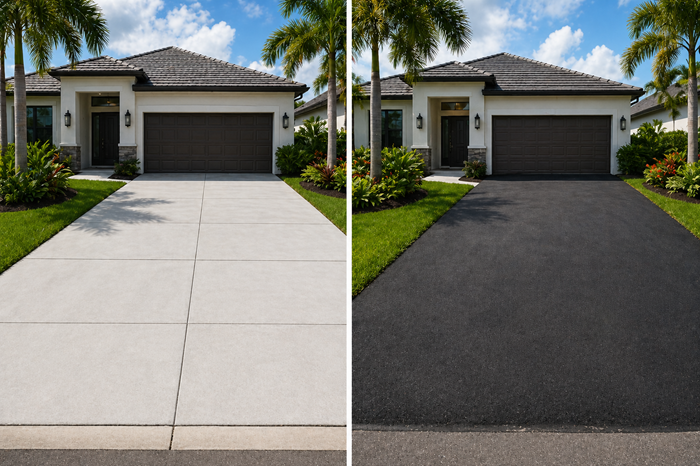
When it comes to upgrading curb appeal and long-term property value, few exterior improvements make a bigger impact than a new driveway. In South Florida, homeowners consistently lean toward concrete over asphalt for one simple reason — it performs better in the region’s demanding climate while offering a cleaner, more upscale appearance.
From intense sun exposure to heavy rain and humidity, South Florida driveways deal with conditions that can quickly wear down weaker materials. That’s why many property owners choose concrete for durability, lower maintenance, and design flexibility. Whether you’re replacing an aging surface or building a brand-new entrance, understanding the difference between concrete and asphalt can help you make the right investment for your home.
Understanding the Difference Between Concrete and Asphalt
At first glance, both materials may seem similar. They create a smooth driving surface, improve accessibility, and add visual structure to a property. But once you compare their lifespan, maintenance needs, and appearance, the differences become much clearer.
Concrete is made using cement, sand, aggregate, and water. Once cured, it forms a hard, durable surface capable of withstanding years of use with minimal maintenance.
Asphalt, on the other hand, is made from aggregate mixed with petroleum-based binders. It offers flexibility and quicker installation, but it generally requires more upkeep over time, especially in hot climates like South Florida.
Why Concrete Performs Better in South Florida
South Florida weather is beautiful, but it can be extremely harsh on outdoor surfaces. Constant UV exposure, tropical storms, heat, and moisture all contribute to surface deterioration.
Concrete holds up exceptionally well under these conditions because it reflects more heat and maintains structural integrity longer than asphalt. Asphalt tends to soften under prolonged sun exposure, which can lead to cracks, dips, and surface wear much sooner.
Homeowners looking for long-term reliability often prioritize durability over short-term savings, which is one of the main reasons concrete continues to dominate residential driveway projects throughout the region.
Concrete Creates a More Upscale Look
Appearance matters, especially in neighborhoods where curb appeal directly affects home value. Concrete offers a cleaner and more modern finish that complements a wide variety of architectural styles.
Unlike darker pavement surfaces, concrete can be customized with decorative finishes, textures, borders, and stamped patterns. This gives homeowners more freedom to create a driveway that matches the overall design of the property.
Many people exploring new concrete driveways also appreciate how well concrete pairs with tropical landscaping, modern exteriors, and coastal-inspired homes commonly found throughout South Florida.
Longevity Makes Concrete a Smarter Investment
While installation costs may initially be higher, concrete often delivers better long-term value because it lasts significantly longer with fewer repairs.
A properly installed concrete driveway can remain in excellent condition for decades when maintained correctly. Asphalt surfaces usually require resealing every few years and may need earlier replacement due to climate-related wear.
This long-term durability is especially important for homeowners planning to stay in their property for many years. Instead of dealing with repeated patching and resurfacing, they can invest once and enjoy consistent performance over time.
Maintenance Requirements Matter
One major reason homeowners move away from asphalt is ongoing maintenance. Asphalt surfaces require routine sealing to protect against moisture penetration and UV damage.
Concrete maintenance is far simpler. Occasional cleaning and periodic sealing are usually enough to preserve appearance and durability.
In humid environments where mold, algae, and standing water can become problems, concrete also tends to resist deterioration better when installed with proper drainage and finishing techniques.
Heat Resistance Is a Major Advantage
South Florida summers place enormous stress on outdoor surfaces. Asphalt absorbs and retains heat, which can make driveways extremely hot while also contributing to softening and deformation.
Concrete reflects more sunlight and maintains a cooler surface temperature. This not only improves comfort for homeowners and visitors but also reduces the risk of premature surface damage.
For families with children, pets, or outdoor living spaces near the driveway, this temperature difference can be surprisingly noticeable.
Concrete Offers More Design Flexibility
Today’s homeowners want more than functionality. They want a driveway that enhances the overall style of the property.
Concrete allows for extensive customization options including:
Stamped Finishes
Stamped surfaces can mimic stone, brick, slate, or tile without the higher material costs associated with natural products.
Colored Concrete
Integral coloring and surface staining provide a broad range of design possibilities that fit modern and traditional homes alike.
Decorative Borders
Borders and scoring patterns add architectural detail and improve visual definition.
If you’re exploring creative layouts and finishes, these driveway design ideas can help inspire a more customized exterior upgrade.
Concrete Supports Better Property Value
Homebuyers often notice exterior improvements before anything else. A cracked or deteriorating driveway can negatively impact first impressions, while a professionally installed concrete surface immediately improves visual appeal.
Because concrete is associated with durability and premium construction quality, it often contributes positively to perceived home value.
In competitive South Florida real estate markets, details like driveway condition can influence buyer confidence and overall property presentation.
Installation Quality Makes All the Difference
Even the best material can fail if installation is rushed or poorly executed. Proper grading, reinforcement, curing, and drainage planning are critical for long-term performance.
That’s why homeowners searching for reliable workmanship often spend time researching experienced driveway contractors near me before starting a project.
Professional installation ensures the surface is prepared correctly to withstand shifting soil, heavy rainfall, and everyday vehicle traffic common throughout South Florida neighborhoods.
Comparing Long-Term Costs
Many homeowners initially compare projects based only on upfront pricing. However, long-term ownership costs tell a much different story.
An asphalt driveway may cost less initially, but frequent sealing, repairs, and resurfacing can increase expenses over time. Concrete generally requires fewer repairs and offers a longer usable lifespan.
This is why many homeowners who originally considered asphalt eventually choose concrete after evaluating total lifetime costs rather than installation alone.
Common Misconceptions About Concrete Driveways
Despite its popularity, several misconceptions still cause confusion among homeowners.
“Concrete Always Cracks”
All paving materials can crack over time if improperly installed. Modern reinforcement methods and professional installation greatly reduce the likelihood of major cracking issues.
“Concrete Looks Too Plain”
Decorative concrete has evolved significantly in recent years. Homeowners now have access to sophisticated finishes, textures, and color combinations that create highly customized appearances.
“Asphalt Handles Storms Better”
Concrete performs extremely well in storm-prone regions when paired with proper drainage systems and quality installation practices.
Choosing the Right Driveway for Your Home
Every property has unique needs based on budget, appearance goals, traffic levels, and maintenance preferences.
Homeowners looking for lower upfront costs and quick installation may still consider asphalt in some situations. However, those focused on longevity, curb appeal, and long-term value typically find concrete to be the better overall investment.
If you’re still weighing your options, reviewing a detailed driveway installation guide can help you better understand the planning and construction process before making a final decision.
Why Concrete Continues to Lead in South Florida
South Florida homeowners consistently choose concrete because it aligns with the region’s climate, aesthetics, and property value expectations.
It resists heat more effectively, requires less maintenance, lasts longer, and delivers a more polished appearance compared to asphalt. While both materials have their place, concrete continues to stand out as the preferred solution for homeowners seeking a durable and visually appealing driveway upgrade.
As more homeowners prioritize long-term performance and curb appeal, concrete remains the clear first choice across South Florida neighborhoods.
FAQs
Is concrete better than asphalt in hot climates?
Yes, concrete handles extreme heat better and resists softening under high temperatures.
How long does a concrete driveway typically last?
A professionally installed surface can last several decades with proper maintenance.
Does concrete require sealing?
Yes, occasional sealing helps protect the surface and preserve appearance.
Can decorative finishes be added to concrete?
Yes, stamped textures, colors, and borders are popular customization options.
Is concrete more expensive upfront?
Usually yes, but lower maintenance costs often make it more cost-effective long term.