
Bathroom remodeling remains one of the smartest investments homeowners can make, especially when improving comfort, functionality, and resale appeal. One of the biggest decisions during a bathroom renovation is choosing between a walk-in shower and a bathtub. While both options offer unique advantages, many homeowners wonder which one actually adds more value to a property.
The answer depends on several factors, including lifestyle, home size, buyer expectations, bathroom layout, and long-term usability. In some homes, a luxurious walk-in shower can modernize the entire space and increase buyer interest. In others, removing a bathtub may hurt resale potential, especially for families with young children.
Understanding how each option affects property value can help homeowners make smarter remodeling decisions before starting a renovation project.
Why Bathroom Upgrades Matter for Home Value
Bathrooms play a major role in how buyers evaluate homes.
An outdated bathroom can make an entire property feel older, while a modern, well-designed bathroom creates a cleaner and more luxurious impression. Buyers often pay close attention to layout, storage, lighting, tile design, and fixtures when comparing homes.
That’s why bathroom remodels consistently rank among the top renovations for return on investment.
Modern buyers are also prioritizing comfort and convenience more than ever. Spacious showers, spa-inspired finishes, and functional layouts are becoming major selling points in competitive real estate markets.
The Growing Popularity of Walk-In Showers
Walk-in showers have become increasingly popular in modern bathroom remodeling projects.
Their sleek appearance, open layout, and accessibility make them appealing to homeowners of all ages. Many people prefer the cleaner and more contemporary look that walk-in showers bring to a bathroom.
In smaller homes and condos, they can also make bathrooms feel significantly larger.
Homeowners working with compact layouts often draw inspiration from space-saving condo bathroom remodeling ideasx # Walk-In Showers or Bathtubs: What Adds More Value?
Bathroom remodeling remains one of the smartest investments homeowners can make, especially when improving comfort, functionality, and resale appeal. One of the biggest decisions during a bathroom renovation is choosing between a walk-in shower and a bathtub. While both options offer unique advantages, many homeowners wonder which one actually adds more value to a property.
The answer depends on several factors, including lifestyle, home size, buyer expectations, bathroom layout, and long-term usability. In some homes, a luxurious walk-in shower can modernize the entire space and increase buyer interest. In others, removing a bathtub may hurt resale potential, especially for families with young children.
Understanding how each option affects property value can help homeowners make smarter remodeling decisions before starting a renovation project.
Why Bathroom Upgrades Matter for Home Value
Bathrooms play a major role in how buyers evaluate homes.
An outdated bathroom can make an entire property feel older, while a modern, well-designed bathroom creates a cleaner and more luxurious impression. Buyers often pay close attention to layout, storage, lighting, tile design, and fixtures when comparing homes.
That’s why bathroom remodels consistently rank among the top renovations for return on investment.
Modern buyers are also prioritizing comfort and convenience more than ever. Spacious showers, spa-inspired finishes, and functional layouts are becoming major selling points in competitive real estate markets.
The Growing Popularity of Walk-In Showers
Walk-in showers have become increasingly popular in modern bathroom remodeling projects.
Their sleek appearance, open layout, and accessibility make them appealing to homeowners of all ages. Many people prefer the cleaner and more contemporary look that walk-in showers bring to a bathroom.
In smaller homes and condos, they can also make bathrooms feel significantly larger.
Homeowners working with compact layouts often draw inspiration from space-saving condo bathroom remodeling ideas that create a more open feel, especially when maximizing visual space is a priority.
Why Buyers Like Walk-In Showers
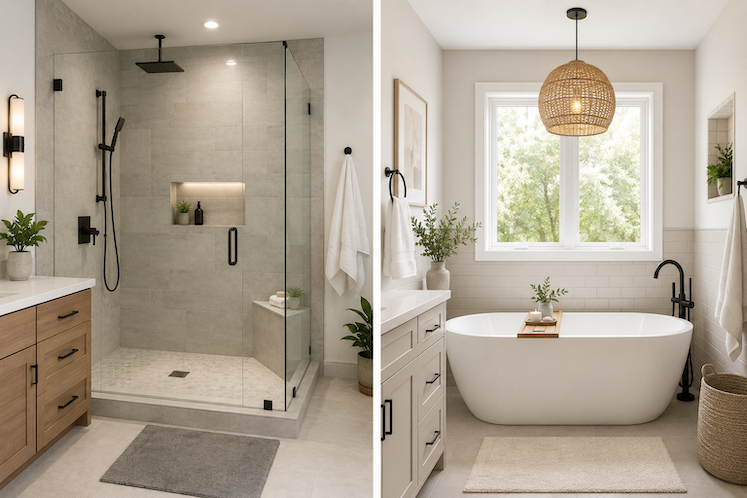
Today’s buyers often associate walk-in showers with luxury and modern design.
Features that attract attention include:
-
Frameless glass enclosures
-
Rainfall showerheads
-
Large-format tile
-
Built-in benches
-
Recessed shelving
-
Barrier-free entry
-
Spa-inspired finishes
These upgrades create a high-end appearance that photographs well in listings and leaves a strong impression during home tours.
Walk-In Showers Improve Accessibility
Accessibility is another major reason walk-in showers add value.
Older homeowners and buyers planning for long-term living often prefer easy-entry showers over climbing into traditional tubs. Curbless walk-in showers can improve safety while maintaining a clean, upscale design.
As more homeowners prioritize aging-in-place renovations, walk-in showers continue gaining popularity across many markets.
Why Bathtubs Still Matter
Despite the growing demand for walk-in showers, bathtubs still play an important role in home value.
For many buyers, especially families, having at least one bathtub in the home remains essential. Parents with young children often rely on tubs for convenience, while some homeowners simply enjoy soaking baths for relaxation.
Removing every bathtub from a home can sometimes hurt resale appeal.
Families Often Expect at Least One Tub
In family-oriented neighborhoods, buyers may specifically look for homes with at least one functional bathtub.
A home without any tubs may feel less practical for households with children. Because of this, many remodeling professionals recommend keeping at least one bathtub somewhere in the home, even if the primary bathroom includes a walk-in shower.
This balance helps maintain broader buyer appeal.
Bathtubs Create a Luxury Feel in Large Bathrooms
Freestanding tubs continue to perform well in luxury bathroom designs.
Large primary bathrooms with soaking tubs often feel more elegant and spa-like. In upscale homes, buyers may expect both a walk-in shower and a bathtub rather than choosing one over the other.
This combination can significantly improve visual appeal and perceived property value.
Which Option Adds More Resale Value?
There is no universal answer because resale value depends heavily on the home’s location, layout, and target buyers.
However, certain trends consistently appear across remodeling and real estate markets.
Walk-In Showers Usually Add More Modern Appeal
In many modern homes, walk-in showers tend to offer stronger visual appeal and better daily functionality.
They:
-
Make bathrooms feel larger
-
Improve accessibility
-
Support modern design trends
-
Reduce visual clutter
-
Appeal to a wide age range
For smaller bathrooms, replacing bulky tubs with walk-in showers often improves both usability and aesthetics.
Bathtubs Help Preserve Marketability
Even though walk-in showers are highly desirable, completely eliminating all bathtubs may narrow the pool of potential buyers.
Homes with at least one bathtub generally maintain stronger market flexibility, particularly in suburban areas where families are common.
That’s why many remodeling experts recommend:
-
Walk-in shower in the primary bathroom
-
Bathtub in a secondary bathroom
This setup often provides the best balance between modern appeal and resale practicality.
Bathroom Size Plays a Major Role
The size of the bathroom significantly affects whether a shower or tub adds more value.
Small Bathrooms Often Benefit From Walk-In Showers
In compact bathrooms, walk-in showers usually improve functionality and visual space.
Traditional tubs can overwhelm smaller layouts, making the room feel crowded and dated. A glass-enclosed shower often creates a cleaner, brighter, and more open appearance.
This is especially beneficial in condos, guest bathrooms, and urban homes where square footage is limited.
Larger Bathrooms Can Accommodate Both
Spacious primary bathrooms often benefit from having both a walk-in shower and a freestanding tub.
This setup creates a luxury experience that many high-end buyers expect. Homeowners with enough space can maximize both comfort and resale value without sacrificing practicality.
Maintenance and Cleaning Considerations
Maintenance is another factor homeowners increasingly consider during renovations.
Walk-In Showers Are Easier to Maintain
Many modern walk-in showers are easier to clean than traditional tubs.
Large tile surfaces, frameless glass, and open layouts reduce hard-to-reach areas where grime and moisture build up. Curbless designs can also simplify maintenance while creating a more seamless appearance.
Bathtubs Require More Space and Cleaning
Bathtubs naturally occupy more floor space and may require additional cleaning effort.
Large tubs, especially jacuzzi-style units, can become less appealing if homeowners rarely use them. Some buyers view oversized tubs as wasted square footage, particularly in homes where bathroom space is already limited.
Lifestyle Preferences Matter More Than Ever
Modern remodeling decisions are becoming increasingly lifestyle-driven.
Homeowners today are designing bathrooms around how they actually use the space rather than simply following traditional layouts.
Busy Professionals Often Prefer Walk-In Showers
People with fast-paced routines often prioritize convenience.
Walk-in showers offer:
-
Faster daily use
-
Easier access
-
Modern aesthetics
-
Efficient cleaning
-
Better space utilization
For many homeowners, a large shower feels more practical than a tub that rarely gets used.
Relaxation-Focused Buyers Still Love Tubs
Some homeowners strongly value soaking tubs for stress relief and relaxation.
Deep soaking tubs, freestanding tubs, and spa-inspired bathrooms still perform well in luxury remodeling projects where comfort and wellness are priorities.
In high-end homes, tubs can remain an important design feature.
Cost Differences Between Walk-In Showers and Bathtubs
Pricing also influences remodeling decisions.
The total cost depends on:
-
Plumbing modifications
-
Tile work
-
Fixtures
-
Glass enclosures
-
Waterproofing
-
Drainage adjustments
-
Material quality
Walk-In Showers Can Become Premium Features
While basic walk-in showers may be affordable, luxury designs can become expensive quickly.
Custom tile, frameless glass, built-in seating, and rainfall systems increase both cost and perceived value.
Many homeowners view these upgrades as worthwhile because they improve everyday use while modernizing the bathroom.
Bathtub Installations Vary Widely
Bathtub pricing varies significantly depending on the style selected.
Standard alcove tubs are relatively affordable, while freestanding tubs, whirlpool systems, and luxury soaking tubs can substantially increase remodeling budgets.
The installation complexity also affects labor costs.
Current Bathroom Remodeling Trends
Bathroom design trends continue evolving toward cleaner and more functional spaces.
Current remodeling trends include:
-
Curbless showers
-
Neutral color palettes
-
Large-format tile
-
Matte black fixtures
-
Floating vanities
-
Natural lighting
-
Minimalist layouts
-
Spa-inspired designs
Walk-in showers align closely with many of these modern preferences, which helps explain their growing popularity.
Should You Replace Your Tub With a Shower?
Before removing a bathtub completely, homeowners should consider several important questions:
-
Is there another bathtub elsewhere in the home?
-
Who are the likely future buyers?
-
How large is the bathroom?
-
Is accessibility important?
-
How long do you plan to stay in the home?
-
Does the current tub get used regularly?
Answering these questions helps determine whether replacing a tub with a shower makes financial and practical sense.
Planning a Bathroom Remodel?
A professionally designed bathroom renovation can improve comfort, functionality, and long-term property value. Whether you’re considering a walk-in shower, soaking tub, or a complete layout transformation, careful planning makes a major difference in the final result.
Conclusion
Both walk-in showers and bathtubs can add value to a home, but the right choice depends on the property, lifestyle needs, and buyer expectations.
Walk-in showers often deliver stronger modern appeal, improved accessibility, and better functionality for smaller spaces. Meanwhile, bathtubs continue to matter for families, luxury bathrooms, and homes where long-term marketability is important.
For many homeowners, the best solution is not choosing one over the other — it’s creating the right balance for the home’s layout and target buyers.
A thoughtfully designed bathroom that feels comfortable, modern, and practical will almost always make a stronger impact than blindly following trends.
Frequently Asked Questions
Do walk-in showers increase home value?
Yes, walk-in showers can increase home value by improving modern appeal, accessibility, and overall bathroom functionality.
Is it bad to remove the only bathtub in a house?
It can hurt resale value in some markets, especially for families with children. Many experts recommend keeping at least one bathtub somewhere in the home.
Are walk-in showers better for small bathrooms?
Yes, walk-in showers often make small bathrooms feel larger and more open because they reduce visual bulk and improve layout efficiency.
What type of bathroom remodel has the best ROI?
Bathroom remodels that improve functionality, modernize finishes, and maintain practical layouts generally offer the strongest return on investment.
Do buyers prefer tubs or showers?
Many buyers prefer large walk-in showers, but families and luxury-home buyers may still expect at least one bathtub.
Are walk-in showers more expensive than bathtubs?
They can be. Custom tile work, frameless glass, and premium fixtures may increase costs, though pricing depends on materials and design complexity.