

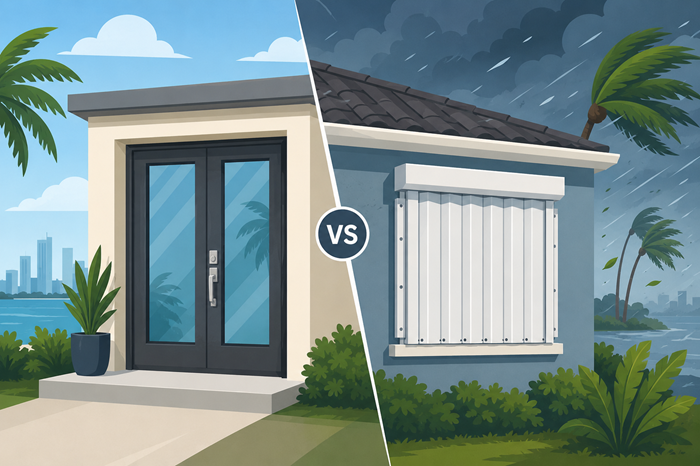
When preparing a Fort Lauderdale home for severe weather, homeowners often compare impact doors with hurricane shutters. Both options can help protect openings from flying debris and high winds, but the better long-term choice depends on more than the initial installation price.
A 10-year total cost of ownership comparison should consider installation, maintenance, replacement, convenience, energy performance, insurance considerations, and the overall value added to the property. For many South Florida homeowners, the decision comes down to whether they want a permanent protective upgrade or a seasonal system that requires regular setup and storage.
What Are Impact Doors?
Impact doors are permanently installed exterior doors designed to withstand severe wind conditions and flying debris. They typically use impact-resistant glass, reinforced frames, and heavy-duty construction to provide year-round protection.
Unlike temporary storm protection systems, impact doors are always in place. There is no need to install panels before a storm or remove them afterward. They also function as everyday entry doors, making them a practical upgrade for homeowners who want protection without sacrificing convenience.
Homeowners comparing storm-resistant upgrades can explore impact doors and windows installation services to review available options for improving protection, style, and everyday performance.
If you are considering a broader home upgrade, working with a qualified home remodelling contractor can help you evaluate door upgrades alongside other exterior improvements.
What Are Hurricane Shutters?
Hurricane shutters are protective coverings installed over windows and doors when a storm approaches. Depending on the system, they may include accordion shutters, storm panels, colonial shutters, or motorized options.
One increasingly popular option is roll down hurricane shutters, which can be operated manually or electronically. They provide convenient storm preparation and can also offer shade, privacy, and security throughout the year.
The main difference is that shutters generally protect the existing opening, while an impact door replaces the door itself with a storm-resistant system.
10-Year Cost Comparison: Impact Doors vs. Shutters
The upfront price is only one part of the decision. A 10-year ownership period provides a more realistic picture of long-term value.
Initial Installation Costs
The cost of impact doors depends on the size, style, glass type, frame material, and installation requirements. A premium custom door may cost more initially than a basic shutter system.
Shutters can also vary significantly in price. A simple storm panel system may have a lower starting cost, while motorized systems can require a larger investment.
Homeowners researching hurricane shutters cost should consider the number of openings being protected, installation complexity, hardware, and future maintenance rather than comparing products by price alone.
Maintenance and Repairs
Impact doors generally require routine cleaning, hardware checks, and occasional adjustment. Because they are permanently installed, there is less risk of damage caused by repeated installation and removal.
Shutters may require more hands-on maintenance, particularly if they are installed and removed frequently. Tracks, fasteners, motors, and moving components can eventually need repair or replacement.
Over a decade, these recurring maintenance needs can narrow the gap between the initial price of shutters and the cost of a permanent impact door upgrade.
Storm Preparation and Convenience
This is one of the biggest practical differences.
Impact doors require no special preparation when a storm is approaching. They remain part of the home’s exterior and are ready to provide protection at all times.
Shutters, on the other hand, must usually be closed, secured, or installed before severe weather arrives. For homeowners with multiple openings, preparation can take considerable time.
That convenience is particularly valuable for seasonal residents, older homeowners, and families who may not want to depend on last-minute storm preparation.
Energy Efficiency and Everyday Performance
Modern impact doors can improve more than storm protection. Many systems offer insulated construction and energy-efficient glass that may help reduce heat transfer and improve indoor comfort.
Shutters can provide shade and reduce direct solar exposure when closed, but they do not replace the performance benefits of upgrading an older exterior door.
For homeowners planning a larger exterior upgrade, exploring affordable exterior remodeling solutions can help identify improvements that combine storm protection, energy efficiency, and curb appeal.
Insurance and Long-Term Value
Insurance savings can vary based on the insurer, policy, property, and approved protection systems. However, storm-resistant improvements may be considered when insurers evaluate a home’s wind mitigation features.
The potential financial benefit should not be treated as a guaranteed discount. Homeowners should confirm eligibility directly with their insurance provider and understand which certifications or installation standards apply.
For a deeper look at the relationship between storm-resistant doors and insurance, read how impact doors can reduce insurance premiums.
Aesthetic Appeal and Property Value
Impact doors can provide a significant visual upgrade. Homeowners can choose from contemporary, traditional, glass-forward, and custom styles that complement the architecture of a Fort Lauderdale property.
Shutters can also be attractive, particularly when selected to match the home’s exterior. However, some systems may change the appearance of windows and doors when closed.
For homeowners focused on both protection and curb appeal, a stylish entryway with hurricane-rated doors can create a stronger first impression while improving storm readiness.
Impact Doors: Which Option Offers Better 10-Year Value?
For homeowners who prioritize permanent protection, low daily effort, improved appearance, and long-term usability, impact doors may offer stronger overall value over a 10-year period.
Shutters may be the better choice for homeowners who want flexible protection across many openings or prefer a lower initial investment. They can also be useful when replacing existing doors and windows is not currently part of the renovation budget.
The best choice depends on the home’s design, the number of openings, budget, maintenance expectations, and how much convenience matters to the homeowner.
The Bottom Line
When comparing hurricane impact doors Miami homeowners should look beyond the initial installation price. A 10-year cost-of-ownership analysis includes maintenance, storm preparation, potential energy benefits, insurance considerations, durability, and everyday convenience.
Impact doors may cost more upfront, but their permanent installation and year-round functionality can make them a compelling long-term investment. Shutters can offer flexible and effective protection, particularly for homeowners who want to protect multiple openings without replacing existing doors.
For many Fort Lauderdale properties, the right solution may even be a combination of both systems.
Frequently Asked Questions
Are impact doors better than hurricane shutters?
Impact doors offer permanent protection and convenience, while shutters can provide flexible protection at a potentially lower initial cost.
How long do impact doors typically last?
With proper installation and maintenance, quality impact doors can provide many years of reliable service.
Are hurricane shutters florida homeowners required to have?
No, requirements vary by location, property type, building codes, and specific construction circumstances.
Do impact doors increase home value?
They may improve curb appeal, durability, and buyer appeal, although the effect on property value varies by market and property.
Should I install impact doors or shutters first?
Prioritize the openings most vulnerable to storms and choose based on your budget, long-term plans, and preferred level of convenience.