
Coastal homes offer beautiful views and a relaxed lifestyle—but they also come with unique challenges, especially when it comes to kitchen remodeling. From humidity and salt air to strong winds and seasonal storms, coastal weather plays a major role in how your kitchen should be designed, built, and maintained.
If you’re planning a remodel, understanding how coastal conditions affect materials, layouts, and finishes can help you make smarter, longer-lasting decisions. This guide walks you through everything you need to know to create a kitchen that not only looks great but also performs well in a coastal environment.
Why Coastal Weather Matters in Kitchen Remodeling
Living near the coast means your home is constantly exposed to environmental elements that inland homes rarely deal with. These include:
-
High humidity levels
-
Salt-laden air
-
Intense sunlight and UV exposure
-
Occasional storms and heavy winds
Over time, these factors can cause wear and tear on standard materials. Cabinets may warp, metal fixtures can corrode, and finishes might fade faster than expected.
That’s why a coastal kitchen remodel isn’t just about aesthetics—it’s about choosing materials and designs that can withstand the environment while maintaining functionality and style.
Choosing Materials That Withstand Coastal Conditions
Moisture-Resistant Cabinetry
Humidity is one of the biggest challenges in coastal homes. Traditional wood cabinets can absorb moisture, leading to swelling, warping, or even mold growth.
Instead, opt for:
-
Marine-grade plywood
-
PVC or thermofoil cabinets
-
High-quality laminate finishes
These materials are designed to resist moisture and maintain their shape over time, even in high-humidity environments.
Corrosion-Resistant Hardware
Salt air can be surprisingly harsh on metal surfaces. Standard hardware may rust or tarnish quickly, especially in kitchens with open windows or strong airflow.
Look for:
-
Stainless steel (especially 304 or 316 grade)
-
Brushed nickel finishes
-
Powder-coated hardware
These options are far more resistant to corrosion and will maintain their appearance longer.
Durable Countertop Materials
Countertops take daily wear, so choosing a durable and weather-resistant option is essential.
Best choices include:
-
Quartz (non-porous and low maintenance)
-
Granite (when properly sealed)
-
Solid surface materials
Avoid highly porous materials that can absorb moisture or stains over time.
Flooring Options for Coastal Kitchens
Water-Resistant Flooring Is a Must
In coastal homes, spills, humidity, and even tracked-in moisture are common. Flooring needs to handle all of it without damage.
Top flooring options:
-
Porcelain or ceramic tile
-
Luxury vinyl plank (LVP)
-
Engineered hardwood
These materials are resistant to moisture and easy to clean, making them ideal for coastal environments.
Slip Resistance and Safety
With moisture comes the risk of slippery surfaces. Choosing textured or matte finishes can improve safety, especially in high-traffic kitchen areas.
Designing for Ventilation and Airflow
Importance of Proper Ventilation
Coastal kitchens benefit from improved airflow to reduce humidity and prevent lingering moisture.
Key considerations:
-
Install a high-quality range hood
-
Ensure proper window placement
-
Consider ceiling fans or cross-ventilation design
Good ventilation helps protect your cabinetry, appliances, and finishes from long-term damage.
Managing Indoor Humidity
In addition to airflow, controlling indoor humidity levels is crucial. Dehumidifiers or HVAC systems with humidity control can significantly extend the life of your kitchen materials.
Color Choices Inspired by Coastal Living
Light, Reflective Palettes
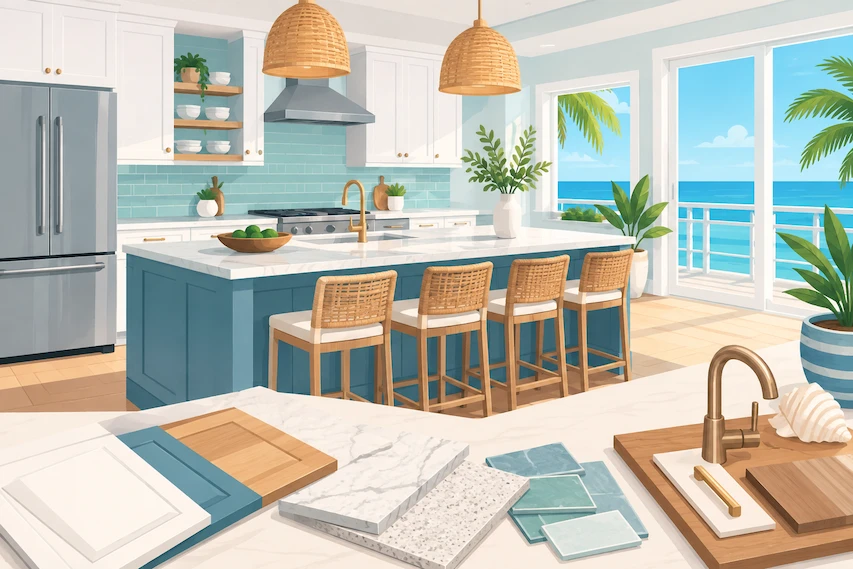
Coastal kitchens often feature light and airy color schemes that reflect natural light and create a relaxed atmosphere.
Popular choices include:
-
Soft whites and off-whites
-
Light blues and seafoam greens
-
Sandy beige and neutral tones
These colors not only match the coastal aesthetic but also help minimize the appearance of wear over time.
UV-Resistant Finishes
Sunlight exposure can cause fading, especially in kitchens with large windows. Using UV-resistant paints and finishes helps maintain color consistency for years.
Smart Layout Choices for Coastal Homes
Open Layouts for Better Airflow
Open-concept kitchens are especially beneficial in coastal homes. They allow better airflow and create a more spacious, breathable environment.
If you’re exploring design styles, this breakdown of minimalist vs modern remodeling styles can help you decide which layout and aesthetic best fits your space.
Elevation and Appliance Placement
In areas prone to flooding or heavy storms, consider slightly elevating appliances or choosing water-resistant installations. While this may not be necessary for every home, it’s worth discussing with your contractor.
Kitchen Remodeling in Older Coastal Homes
Older homes near the coast often come with additional challenges, such as outdated materials or structural issues affected by years of exposure.
Before starting your remodel, it’s important to assess:
-
Structural integrity
-
Electrical and plumbing systems
-
Existing moisture damage
Energy Efficiency and Coastal Kitchens
Appliances That Handle Humidity
Coastal environments can affect appliance performance. Choosing energy-efficient, high-quality appliances designed to handle moisture ensures better longevity.
Insulation and Window Upgrades
Proper insulation and energy-efficient windows can reduce heat gain and help regulate indoor temperature, especially in sunny coastal regions.
Common Mistakes to Avoid
Even well-planned kitchen remodels can run into issues if coastal factors are overlooked.
Here are common mistakes to avoid:
-
Choosing materials based on appearance alone
-
Ignoring ventilation needs
-
Using low-grade hardware prone to corrosion
-
Overlooking long-term maintenance requirements
Being proactive during the planning stage can save you from costly repairs later on.
Why Professional Planning Makes a Difference
A coastal kitchen remodel requires more than standard design knowledge. It involves understanding how environmental conditions affect every component of your kitchen.
Working with experienced professionals ensures:
-
Proper material selection
-
Smart layout planning
-
Compliance with local building requirements
-
Long-term durability and performance
If you’re ready to start your project, exploring professional kitchen remodeling services is a practical next step toward building a kitchen that fits both your lifestyle and your environment.
Final Thoughts
Coastal weather brings both beauty and complexity to kitchen remodeling. By choosing the right materials, improving ventilation, and planning with durability in mind, you can create a kitchen that stands up to the elements while maintaining a clean, modern look.
Whether you’re updating a small space or planning a full renovation, taking coastal conditions into account will help you avoid common pitfalls and get the most value from your investment.