

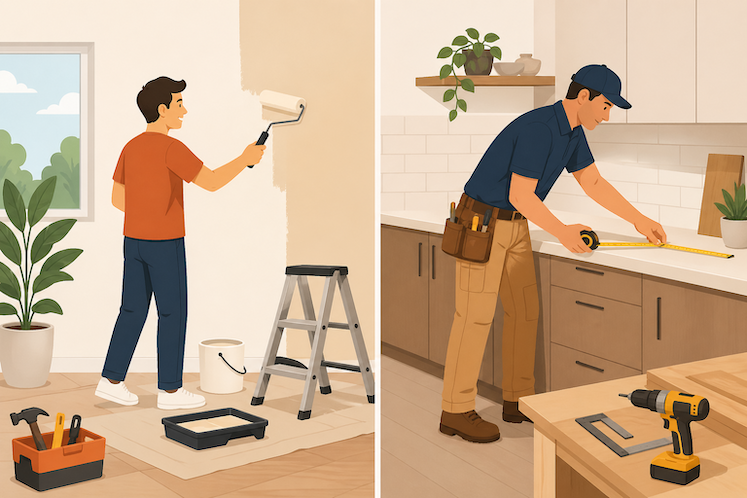
Thinking about tackling that home project yourself or calling in the pros? Whether it’s sprucing up your kitchen or updating an older space, the DIY versus contractor debate comes up a lot. I’ve seen homeowners save money with their own two hands, but also regret skipping expert help on bigger jobs. In this guide, we’ll break down the pros, cons, costs, and real-world factors to help you decide what’s best for your renovation goals. Let’s dive in and get you equipped to make a smart choice.
Understanding DIY Home Projects
DIY projects let you roll up your sleeves and transform your space on your terms. Picture painting a room or installing new shelves—many start here because it’s empowering and budget-friendly.
The appeal is real. You control the pace, pick every detail, and learn skills along the way. Tools from your local hardware store and online tutorials make it accessible for beginners.
But not every project fits this mold. Simple fixes like patching drywall or swapping fixtures work well, while complex electrical or plumbing work demands caution.
Benefits of Going the DIY Route
One big win with DIY is the cost savings. Skip labor fees, which can eat up 40-50% of a pro’s quote, and pocket that cash for materials.
You also enjoy total creative freedom. Want a bold backsplash or custom shelving? Make it happen without explaining your vision to someone else.
DIY builds skills and satisfaction. Finishing a weekend warrior project gives that rush of accomplishment few things match.
Time flexibility is another perk. Work evenings or weekends to fit your schedule, avoiding contractor timelines.
Drawbacks of DIY Renovations
Time sinks are common. What seems like a quick weekend job often stretches into weeks, pulling you from family or work.
Skill gaps show up fast. Without experience, mistakes like uneven tiling or faulty wiring lead to costly fixes.
Safety risks loom large. Power tools, heights, or structural changes can cause injuries if you’re not trained.
Quality might suffer too. Pros bring tools and techniques that ensure longevity, while DIY efforts sometimes need redoing sooner.
Hidden costs add up. Renting equipment, buying premium materials, or fixing errors can match pro prices.
When Hiring a Contractor Makes Sense
For major overhauls, like full kitchen remodels, pros shine. They handle permits, codes, and surprises like hidden water damage.
Expertise saves headaches. Contractors spot issues early, ensuring your project meets standards and lasts.
Speed matters. Teams work efficiently, finishing in days what DIY might take months.
Warranty and insurance protect you. Reputable firms back their work, covering mishaps you couldn’t afford alone.
If you’re short on time or tackling something structural, this is your path.
Key Factors in Choosing Interior Remodeling vs New Construction
Deciding between refresh and rebuild? Interior remodeling vs new construction whats better often boils down to your home’s age and goals. Remodeling updates existing spaces cost-effectively, while new builds offer fresh starts but higher expenses.
Assess your property first. Older homes benefit from targeted updates that preserve character without full teardowns.
Budget plays huge. Remodels run 30-50% less than new construction, freeing funds for luxury finishes.
Timeline and disruption factor in. Remodels minimize downtime compared to ground-up builds.
Pros and Cons of Professional Contractors
Hiring brings reliability. Vetted pros deliver consistent quality, backed by years of experience.
They manage everything—sourcing materials, coordinating subs, and navigating regulations.
Access to better tools and networks means superior results, like custom cabinetry or energy-efficient installs.
On the flip side, costs are higher. Expect $50-150 per hour plus materials markup.
Scheduling depends on their availability, potentially delaying your timeline.
Miscommunication happens if you don’t vet well. Always check references.
Cost Breakdown: DIY vs Contractor
DIY shines on small jobs. Refreshing a bathroom might cost $1,000-3,000 in materials versus $5,000-15,000 with a pro.
Mid-size projects like kitchen updates flip the script. DIY could hit $10,000-20,000 with errors, while contractors quote $20,000-50,000 but include guarantees.
Large renovations? Pros win. A full home remodel runs $50,000+, but DIY risks code violations and resale hits.
Factor resale value. Pro work boosts home worth more reliably—studies show 60-80% ROI on kitchen remodels done right.
Hidden fees: DIY tool rentals ($200+), pros’ overhead (included in bids).
Real-World Examples from Homeowners
Take Sarah’s kitchen redo. She went DIY on cabinets, saving $4,000, but crooked installs cost $2,500 to fix. Lesson learned.
Mark hired for his Fort Lauderdale older home. Remodeling older homes in Fort Lauderdale guide helped him navigate vintage wiring, finishing on time without surprises.
Before selling, many weigh updates. Curious if kitchen renovation worth it before selling? Data shows yes for ROI, especially with pros.
These stories highlight matching approach to project scope.
Essential Questions Before Hiring
Vet candidates thoroughly. When hiring a kitchen remodeling contractor key questions, ask about licenses, insurance, and past projects.
Timeline and budget clarity prevent overruns. Get detailed bids.
References matter. Speak to recent clients.
For any project, explore our remodeling service options to kickstart professionally.
Tools and Skills for Successful DIY
Start with basics: tape measure, level, drill, and safety gear. Invest in quality to avoid frustration.
Online resources abound—YouTube channels and apps guide step-by-step.
Practice on small tasks. Master painting before tackling tile.
Know your limits. If it involves load-bearing walls or HVAC, call pros.
Legal and Safety Considerations
Permits are non-negotiable. Skipping them risks fines or failed inspections.
DIY electrical or plumbing? Codes are strict—mistakes void insurance.
Pros carry liability coverage, shielding you from accidents.
Resale inspections flag amateur work, hurting value.
Long-Term Value Comparison
DIY suits quick, low-risk updates with 20-40% savings but potential quality trade-offs.
Contractors offer 50-70% ROI on major jobs, per remodeling reports.
Hybrid approach works: DIY cosmetics, pro for structure.
Think future-proofing. Energy-efficient pro installs save thousands over time.
Tips for a Smooth Decision Process
List your project scope, budget, and timeline.
Research local costs—vary by area.
Get 3+ contractor bids.
Test DIY on a pilot task.
Weigh opportunity cost: your time versus pro efficiency.
Ready for pros? Our team delivers top results.
FAQ
Is DIY always cheaper than hiring a contractor?
Not necessarily. While materials cost less, time, tools, and fixes often erase savings on complex jobs. Pros provide efficiency and warranties that add long-term value.
What home projects are best for DIY beginners?
Start with painting, simple flooring, or fixture swaps. Avoid anything structural, electrical, or plumbing-heavy without experience.
How do I find a reliable contractor?
Check licenses, insurance, reviews, and references. Ask detailed questions about timelines, costs, and warranties. Get multiple bids.
Can DIY projects increase my home’s resale value?
Yes, if done well. Quality updates like fresh paint or modern fixtures appeal to buyers, but poor work can deter them.
What’s the average cost of a full kitchen remodel?
DIY: $10,000-25,000. Professional: $25,000-60,000, depending on size, materials, and location. Pros often yield better ROI.
Should I renovate before selling my house?
Target high-impact areas like kitchens. It can boost offers by 5-10%, but only if updates suit buyer tastes.