
When you’re planning a bathroom remodel, flooring is one of the most important decisions you’ll make. Bathrooms experience constant moisture, temperature changes, heavy foot traffic, and the occasional dropped hair tool or bottle. Choosing the right flooring isn’t just about appearance—it’s about finding a material that stands up to everyday use while complementing your home’s style.
The best bathroom flooring combines durability, water resistance, easy maintenance, and timeless appeal. Whether you’re remodeling a compact guest bathroom or creating a luxurious primary suite, selecting the right flooring can improve comfort, simplify cleaning, and even increase your home’s value.
In this guide, we’ll explore the most durable bathroom flooring options, compare their pros and cons, discuss factors to consider before making a decision, and help you choose the perfect material for your renovation.
Why Bathroom Flooring Matters More Than You Think
Unlike flooring in bedrooms or living rooms, bathroom floors deal with moisture every single day. Water splashes from showers, overflowing sinks, humid air, and frequent cleaning all put stress on the surface.
The wrong flooring can lead to:
-
Water damage beneath the surface
-
Mold and mildew growth
-
Warping or swelling
-
Cracked finishes
-
Costly repairs years down the road
That’s why investing in a durable, moisture-resistant floor pays off over time. A quality material not only lasts longer but also keeps your bathroom looking beautiful with less maintenance.
What Makes Bathroom Flooring Durable?
Not every flooring material performs well in wet environments. Before comparing options, it’s helpful to understand what characteristics make bathroom flooring truly durable.
Water Resistance
Bathrooms are constantly exposed to moisture. Flooring should resist water penetration to prevent damage beneath the surface.
Scratch and Impact Resistance
Daily use, pets, children, and dropped objects can all wear down flooring over time. Durable materials resist scratches, chips, and dents.
Easy Maintenance
Bathroom floors should be simple to clean without requiring specialized products or constant sealing.
Slip Resistance
Safety is just as important as appearance. Many flooring materials are available with textured finishes that reduce slipping on wet surfaces.
Long Lifespan
While budget matters, choosing flooring that lasts 20 years or more often provides better value than replacing inexpensive materials every few years.
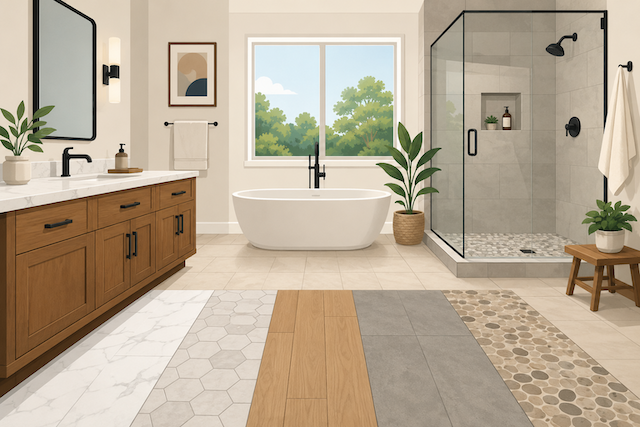
1. Porcelain Tile
Porcelain tile is widely considered the gold standard for bathroom flooring, and for good reason.
Manufactured under extremely high temperatures, porcelain is denser and less porous than standard ceramic tile. This makes it exceptionally resistant to moisture, stains, and everyday wear.
Advantages
-
Nearly waterproof
-
Extremely durable
-
Scratch resistant
-
Available in countless colors and styles
-
Mimics wood, marble, stone, and concrete
-
Suitable for radiant floor heating
Modern porcelain tiles are so realistic that many homeowners mistake them for genuine hardwood or natural stone.
Considerations
Porcelain is harder than many other flooring materials, which means standing for long periods can feel less comfortable. It can also be slippery when polished, although textured finishes solve this issue.
Professional installation is recommended because cutting porcelain requires specialized equipment.
2. Ceramic Tile
Ceramic tile remains one of the most popular bathroom flooring materials thanks to its affordability and versatility.
Although slightly less dense than porcelain, ceramic still performs exceptionally well in bathrooms when properly installed.
Advantages
-
Budget friendly
-
Water resistant
-
Wide variety of colors
-
Easy to clean
-
Long lifespan
-
Low maintenance
Ceramic offers nearly endless design possibilities, allowing homeowners to create everything from traditional bathrooms to sleek contemporary spaces.
Considerations
Because ceramic is slightly more porous than porcelain, it may be more susceptible to chips or cracks under heavy impact.
Quality installation and grout sealing help maximize its lifespan.
3. Natural Stone Flooring
Natural stone creates a luxurious bathroom that instantly elevates the appearance of your home.
Popular choices include:
-
Marble
-
Slate
-
Travertine
-
Granite
-
Limestone
Each stone offers unique textures, colors, and patterns that cannot be replicated exactly.
Advantages
-
Premium appearance
-
Adds resale value
-
Extremely durable
-
Every tile is unique
-
Excellent longevity
Stone flooring often becomes the centerpiece of upscale bathroom remodels.
If you’re considering other upgrades that increase home value, comparing remodel ROI choices can help you decide where your renovation budget delivers the greatest return.
Considerations
Natural stone requires more maintenance than porcelain or ceramic.
Most stone floors need periodic sealing to protect against moisture and stains. Some polished stones can also become slippery when wet.
4. Luxury Vinyl Plank (LVP)
Luxury vinyl flooring has improved dramatically over the past decade.
Today’s premium products closely resemble hardwood or stone while offering exceptional water resistance and comfort underfoot.
For homeowners seeking durability without the cost of natural materials, LVP has become one of the fastest-growing flooring choices.
Advantages
-
Waterproof options available
-
Comfortable to walk on
-
Softer than tile
-
Easy installation
-
Lower installation costs
-
Excellent for busy households
Luxury vinyl is particularly attractive for families with children because it’s quieter and warmer than tile flooring.
Considerations
Lower-quality vinyl products may wear faster or fade over time.
Investing in a reputable brand with a thick wear layer provides better long-term performance.
5. Waterproof Engineered Flooring
Some homeowners love the warmth and appearance of wood but worry about moisture.
Traditional hardwood isn’t recommended for bathrooms because it expands and contracts with humidity. However, newer waterproof engineered flooring provides a practical alternative.
These products feature multiple stable layers designed to resist moisture better than solid hardwood.
Advantages
-
Authentic wood appearance
-
Greater moisture resistance
-
Comfortable surface
-
Stable construction
-
Suitable for larger bathrooms
Engineered flooring creates a warm, inviting atmosphere that complements both modern and classic bathroom designs.
Considerations
Although significantly more water resistant than traditional hardwood, prolonged standing water should still be avoided.
Prompt cleanup helps maximize the flooring’s lifespan.
Moisture Protection Is Just as Important as the Flooring
Even the most durable flooring performs best when paired with materials designed for humid environments.
Bathrooms experience constant exposure to steam, splashes, and changing temperatures, so it’s worth choosing finishes that help protect the entire space—not just the floor. From wall panels to grout and underlayment, selecting moisture-resistant bathroom materials can significantly improve the longevity of your remodel while reducing future maintenance.
Likewise, proper ventilation and professional installation play a major role in preventing moisture-related problems before they start.
How to Choose the Right Bathroom Flooring
Every household has different priorities, so there’s no single flooring material that’s perfect for everyone.
Before making your decision, consider:
Your Budget
Determine how much you’re comfortable spending on both materials and installation. Remember that investing in higher-quality flooring can reduce maintenance and replacement costs over time.
Bathroom Size
Larger bathrooms often benefit from larger-format tiles, while smaller spaces may feel more open with lighter flooring colors and fewer grout lines.
Household Lifestyle
If your bathroom sees heavy daily use, prioritize durability and ease of maintenance. Families with children or pets often benefit from flooring that resists scratches, stains, and moisture without requiring frequent upkeep.
Match Your Flooring to Your Bathroom Design
Durability should always come first, but style matters too. The right flooring can completely transform the look and feel of your bathroom while tying together your vanity, walls, shower, and fixtures.
Instead of treating flooring as a separate design choice, think of it as the foundation for the entire room.
Modern Bathrooms
Large-format porcelain tiles in gray, white, or concrete finishes create a clean, contemporary appearance.
Minimal grout lines also make maintenance easier while helping the room feel more spacious.
Traditional Bathrooms
Natural stone, marble-look porcelain, and classic ceramic tiles complement timeless cabinetry and elegant fixtures.
These materials add warmth and sophistication without sacrificing durability.
Coastal and Florida-Inspired Homes
Light-colored flooring works especially well in coastal homes, creating an open, airy atmosphere while reflecting natural light.
Sand-colored porcelain, soft beige stone, and wood-look tile remain popular choices because they pair beautifully with bright bathrooms and modern finishes.
Choosing the Right Color
Color affects far more than appearance. It can influence how large, bright, and inviting your bathroom feels.
Light Flooring
Lighter floors can:
-
Make small bathrooms feel larger
-
Reflect more natural light
-
Create a clean, spa-like atmosphere
-
Pair easily with almost any cabinet color
Dark Flooring
Darker floors offer:
-
Rich visual contrast
-
Modern sophistication
-
Better concealment of everyday dirt
-
Dramatic design appeal
Many homeowners choose medium gray or warm beige because they offer the perfect balance between style and practicality.
Don’t Forget About Grout
Even the best flooring can underperform if the grout isn’t selected carefully.
High-quality grout helps:
-
Prevent moisture penetration
-
Resist mold and mildew
-
Reduce staining
-
Simplify cleaning
Epoxy grout is especially popular because it’s highly water resistant and requires less maintenance than traditional cement grout.
Although it costs more initially, it often saves homeowners time and money over the years.
Professional Installation Makes a Difference
Bathroom flooring is only as reliable as its installation.
Even premium materials can develop problems if they’re installed incorrectly.
Professional installers ensure:
-
Proper subfloor preparation
-
Accurate waterproofing
-
Level tile placement
-
Correct expansion spacing
-
Durable grout application
-
Long-lasting performance
Experienced remodeling professionals also identify hidden issues like moisture damage before new flooring is installed.
Bathroom Flooring Trends That Combine Style and Durability
Today’s bathroom flooring offers much more than simple white tile.
Some of the most popular trends include:
Wood-Look Porcelain Tile
This option delivers the warmth of hardwood without the moisture concerns.
It’s one of the fastest-growing flooring styles because it combines timeless design with exceptional durability.
Large-Format Tile
Fewer grout lines create a cleaner appearance while making bathrooms feel larger.
Large tiles are especially popular in modern luxury homes.
Textured Finishes
Slip-resistant textured surfaces improve safety without compromising appearance.
Many porcelain collections now include matte finishes that provide excellent traction.
Natural Stone Looks
Technology has made porcelain remarkably realistic.
Many homeowners choose porcelain that mimics marble, slate, or travertine because it delivers the appearance of natural stone with far less maintenance.
Flooring and Shower Design Should Work Together
Your flooring shouldn’t be viewed in isolation. It should complement the shower, vanity, walls, and lighting to create a cohesive design.
For example, if you’re planning a bathroom upgrade, incorporating walk-in shower tiles alongside durable flooring creates a polished, high-end look that feels intentional from floor to ceiling.
Coordinating materials, colors, and textures throughout the space helps your bathroom feel larger, more cohesive, and professionally designed.
Flooring Tips for Small Bathrooms
Smaller bathrooms benefit from thoughtful flooring choices that create the illusion of more space.
To make a compact bathroom feel bigger:
-
Choose light-colored flooring.
-
Use larger tiles with minimal grout lines.
-
Continue the same flooring into the shower when possible.
-
Avoid overly busy patterns.
-
Select finishes that reflect natural light.
If you’re remodeling a compact space, these small bathroom layouts offer additional ideas for maximizing every square foot without sacrificing style.
Maintaining Your Bathroom Floor
Even durable flooring lasts longer with proper care.
Here are a few simple maintenance tips:
-
Clean spills promptly.
-
Sweep or vacuum regularly to remove grit.
-
Use non-abrasive cleaning products.
-
Reseal natural stone when recommended.
-
Inspect grout periodically for cracks.
-
Maintain good bathroom ventilation to reduce excess humidity.
Routine maintenance preserves both the appearance and performance of your flooring for years to come.
Which Bathroom Flooring Is Best?
The answer depends on your priorities.
If durability is your primary concern, porcelain tile remains the top choice for most homeowners. It offers outstanding water resistance, exceptional longevity, and nearly unlimited design possibilities.
If comfort is more important, luxury vinyl plank provides warmth underfoot while still delivering excellent moisture resistance.
Natural stone offers unmatched elegance, while ceramic tile remains an affordable and dependable option for many remodeling projects.
Ultimately, the best bathroom flooring is the one that fits your budget, complements your home’s style, and stands up to everyday life.
Invest in Flooring That Lasts
Bathroom flooring is one of the most heavily used surfaces in your home. Choosing durable materials today helps prevent costly repairs, improves daily comfort, and adds lasting value to your property.
Whether you’re planning a simple bathroom refresh or a complete renovation, working with experienced remodeling professionals ensures every detail—from waterproofing to installation—is completed correctly.
Ready to upgrade your bathroom with beautiful, long-lasting flooring?
Frequently Asked Questions
What is the most durable bathroom flooring?
Porcelain tile is widely considered the most durable bathroom flooring because it’s highly water resistant, scratch resistant, and capable of lasting for decades with minimal maintenance.
Is luxury vinyl flooring good for bathrooms?
Yes. High-quality luxury vinyl plank (LVP) is waterproof, comfortable underfoot, and resistant to everyday wear, making it an excellent choice for busy households.
Is natural stone worth the investment?
Natural stone provides unmatched beauty and can increase home value. However, it requires periodic sealing and slightly more maintenance than porcelain or ceramic tile.
Which bathroom flooring is easiest to clean?
Porcelain tile, ceramic tile, and luxury vinyl are among the easiest bathroom flooring materials to maintain. Regular sweeping and occasional mopping are usually all that’s needed.
What flooring is safest for wet bathrooms?
Textured porcelain tile, matte-finish ceramic tile, and slip-resistant luxury vinyl flooring all provide better traction than highly polished surfaces, helping reduce the risk of slips.
Can bathroom flooring increase home value?
Yes. High-quality, professionally installed bathroom flooring enhances both appearance and functionality, making your home more appealing to future buyers.